
💡 TL;DR:

Quartz needs the least upkeep and doesn't need sealing. Granite generally takes heat better but may need periodic sealing. Butcher block adds warmth but needs regular oiling. Choose by how your household cooks and cleans.

Choosing between quartz vs. granite countertops shapes how a kitchen looks, cleans and handles heat, and butcher block can join the mix for an island or prep zone. Below, Vital Needs Remodeling compares all three on durability, upkeep and cost, then matches each one to the households it tends to suit.

Quartz vs. Granite Countertops vs. Butcher Block at a Glance

Quartz asks the least of you day to day, while granite handles heat and hard use with occasional sealing. Butcher block countertops have the clearest pros and cons: more care in exchange for a warm wood surface that suits an island or prep zone.

Countertop comparison at a glance

‍

QuartzGraniteButcher block
What it isEngineered stoneNatural igneous rockSolid hardwood
ScratchesResists them, but not scratch-proofMain minerals are harder than a knife bladeShows knife marks and wear
HeatUse trivets; direct heat can damage itMany stones tolerate heat; trivets advisedUse trivets
Stains and waterNonporous; resists stainsVaries by stone; sealing helpsAbsorbs water if neglected
Routine upkeepMild soap and waterNeutral stone cleaner; reseal as neededWipe dry; oil about monthly
Published cost$75–$120 per sq ft$70–$150 per sq ftNot published; quoted per project
Worth considering forBusy families, low-upkeep ownersAvid cooksPrep zones and islands

‍

The costs above are the per-square-foot ranges Vital Needs publishes for its own projects, not national averages. Your quote depends on the slab, edges and cutouts you choose.

What Are Quartz, Granite and Butcher Block Made Of?

Quartz is a manufactured stone, granite is quarried rock, and butcher block is wood. That difference in origin explains most of how each one behaves.

  • Quartz is an engineered stone surface, also called quartz surfacing. Washington’s Department of Labor & Industries notes in its silica hazard alert that it can contain up to 93% silica, versus typically 10–45% for granite. That silica matters to slab-cutting crews, since exposure only occurs when dust is in the air.
  • Granite is a natural stone. The U.S. Geological Survey describes granite as an igneous rock defined by grains of quartz and feldspar, so the grain pattern varies from slab to slab.
  • Butcher block is a slab built from strips of solid hardwood. It is the only one of the three that is not stone, so it reacts to moisture in ways quartz and granite do not.

‍

Warm wood butcher block island countertop in the foreground with white shaker cabinets and a beveled subway tile backsplash behind it.

‍

How Do the Three Hold Up to Daily Use?

Both stones resist everyday wear better than wood, while butcher block shows knife marks and wear sooner. Heat and moisture are where the real differences show up.

Scratches and Chips

Both stones resist scratches better than butcher block, but neither is fully scratch- or chip-proof.

  • Granite: its main minerals rate 6 and 7 on the Mohs scale, above a knife blade at about 5, per a university mineral-hardness reference.
  • Quartz: scratch resistant, though one quartz manufacturer’s care guide notes that no stone is scratch-proof or chip-proof. Knocks near sinks and dishwashers can chip a quartz edge.
  • Butcher block: takes knife marks, so cutting boards help it last.

On one Vital Needs countertop replacement, the old counters showed scratched surfaces, faded color and visible seams. New granite with soft veining replaced them.

Heat

Granite generally tolerates heat better than quartz, but a trivet is the safe habit for both.

  • Granite: the Natural Stone Institute notes that many stones can withstand heat, but it still recommends trivets or mats. The quartz maker’s guide adds that sudden temperature changes can damage natural stone, especially near the edges.
  • Quartz: not heatproof. The same guide warns it may not withstand direct heat from pots, pans, air fryers and slow cookers.

Water and Stains

Quartz shrugs off spills, granite depends on the stone and its seal, and wood needs the most care around water.

  • Quartz: nonporous, so spills sit on the surface instead of soaking in.
  • Granite: varies by stone; sealing makes it more stain resistant, not stain proof.
  • Butcher block: wood swells as it gains moisture and shrinks as it dries, per the USDA Forest Products Laboratory’s Wood Handbook. That movement can cause warping, checking or splitting.

Extension guidance on wooden boards adds that wood can absorb moisture and harbor bacteria if it isn’t properly maintained. Keeping stone at the sink and wood on an island is one way to limit both risks.

How Much Upkeep Does Each Countertop Need?

Quartz needs only routine cleaning, granite needs cleaning plus an occasional sealing check, and butcher block needs regular oiling. Here is what each takes in a typical week and year.

Care at a glance

‍

Everyday cleaningPeriodic careAvoid
QuartzWarm water, soft cloth, mild soapNone; no sealing neededDirect heat from pans and appliances
GraniteNeutral stone cleanerReseal when the water test shows absorptionAcidic or abrasive cleaners; standing spills
Butcher blockWipe and dry promptlyFood-safe mineral oil about once a monthStanding water and soaking

‍

To check whether granite needs resealing, stone-care experts on the Natural Stone Institute's consumer site suggest a simple water test:

  1. Put a little hot water on the counter.
  2. Let it sit for 10 to 20 minutes, then wipe it off.
  3. If the stone darkens, it is still absorbing and is due for sealer.

Daily habits help a seal last. The same experts recommend:

  • Wiping granite with a neutral cleaner
  • Cleaning up spills quickly
  • Keeping bottles like dish soap on a tray

They also note that improper cleaners, along with sunlight and air, are what break a sealer down.

For butcher block, a university extension guide on wooden cutting boards points to habits that suit a wood counter too:

  • Food-safe mineral oil or beeswax about once a month, or more often if the wood looks dry
  • No soaking or standing water
  • Regular checks for cracks or deep grooves

Sealant selection is one of the pricing factors on a Vital Needs countertop estimate. If you choose granite, ask which sealer it will get and when to run the water test again.

‍

Kitchen remodel in progress showing a gray granite countertop, undermount stainless steel sink, and high-arc chrome faucet beneath a large window.

‍

Is Quartz More Expensive Than Granite?

Not necessarily: at Vital Needs, the quartz and granite price ranges overlap, and granite's range runs both lower and higher. The specific slab you choose can matter more to the final price than whether it is quartz or granite.

‍

MaterialVital Needs published range
Quartz$75–$120 per sq ft
Granite$70–$150 per sq ft
Butcher blockNot published; quoted per project

‍

Any quartz vs. granite cost comparison depends on more than the material itself. The pricing factors Vital Needs lists for its countertop projects include:

  • The specific stone or engineered surface
  • Total square footage and edge style
  • Sink cutouts and backsplash integration
  • Fabrication complexity
  • Finish and sealant selection

Vital Needs provides a transparent estimate covering scope, materials and schedule before work begins. Counters can also be replaced on their own, without changing your cabinets or layout.

The countertop page also compares prefab and custom counters:

  • Prefab: cut from standard slabs, which can leave seams or fillers; the budget-friendly option.
  • Custom: built from a template of your kitchen and measured for an exact fit; costs more.

In a full remodel, counter orders come after the layout is signed off, which is why counters should wait until the layout is final. Putting the new counters in typically takes about 1–3 days; for the full sequence, see where countertops fall in a remodel timeline.

What's the Best Kitchen Countertop Material for Your Household?

It depends on how your household cooks, cleans and uses the kitchen.

Vital Needs' countertop page names quartz as its most popular choice, mainly for stain and scratch resistance. The right pick for your kitchen still depends on the trade-offs below.

Busy Families With Kids

  • Worth considering: quartz.
  • Why: it resists stains and wipes clean with mild soap, with no sealing schedule to track.
  • Watch for: heat and chips. Keep trivets near the stove and take care with the edge by the dishwasher.
  • Also a fit: granite, if you're comfortable checking its seal.

Avid Home Cooks

  • Worth considering: granite, often with a butcher block prep zone.
  • Why: granite generally tolerates heat better than quartz and isn't sensitive to most common household acids.
  • Add wood for prep: stone surfaces can dull knives faster, so some cooks add a wood island or prep section. Each zone then does the job it handles well.
  • One surface throughout? Granite is the simpler fit. Quartz works as well, as long as trivets stay within reach of the stove.

Rental or Resale-Focused Owners

  • Worth considering: quartz or a mid-range granite.
  • Quartz: needs no sealing or oiling, so there's less for a tenant to keep up.
  • Granite: a hard-wearing natural stone. Its sealing checks are quick, but someone has to remember them.
  • Butcher block: its monthly oiling is easy for a tenant to skip.
  • Weigh durability and upkeep here rather than expecting any one material to raise a sale price.

Low-Maintenance Seekers

  • Worth considering: quartz.
  • Why: among low-maintenance countertops, it asks for little beyond daily wiping, with no sealer or oil to keep up.
  • Spills: its nonporous surface means they wipe off rather than soak in.
  • Runner-up: granite, if a quick water test now and then doesn't bother you.
  • Use cutting boards and trivets on either one all the same.

You may end up weighing two of these options rather than all three. To compare them for your own space, see how Vital Needs Remodeling handles countertop projects, from material choice to templating and fabrication.

See Countertop Samples Before You Choose

Seeing quartz, granite and butcher block against your own cabinets and light makes the choice easier. Vital Needs Remodeling brings 11+ years of remodeling experience to homes across Snohomish and King County.

  • Samples first: countertop samples are shared before fabrication.
  • Precise fit: each counter is templated to your cabinets, sink and backsplash.
  • Backed work: the company is licensed, bonded and insured, with a 12-month workmanship warranty.

Explore our kitchen countertop options and services or see what our kitchen remodeling services cover. When you're ready to compare samples for your kitchen, request a free estimate.

Frequently Asked Questions

Is quartz better than granite?

Neither is better for every kitchen. Quartz suits households that want stain resistance and no sealing. Granite suits cooks who want more heat tolerance and a one-of-a-kind natural pattern. Vital Needs' published per-square-foot ranges for the two overlap, so the choice often comes down to upkeep and look.

Does quartz stain?

Quartz resists staining because its surface is nonporous and doesn't absorb spills. That makes it stain resistant rather than stain proof. Wipe up spills with warm water, a soft cloth and mild soap, and use cutting boards and trivets to protect the surface.

Can you put hot pans on quartz?

It's safer not to. One quartz manufacturer's care guide warns that direct heat from pots, pans and appliances like air fryers can damage the surface. Use a hot pad or solid trivet under anything that comes off the stove or out of the oven.

Does granite stain?

It can. Some granites are dense and resist stains with little help, while more porous stones absorb oils and liquids unless sealed. Sealing makes granite more stain resistant, not stain proof, so wipe up spills promptly. Oil-based stains tend to darken the stone.

Do granite countertops need to be sealed?

Many do. Stone-care experts quoted on the Natural Stone Institute's consumer site recommend sealing most granites, though some dense stones need little or none. How often depends on use and the sealer applied. A good sealer can last up to 10 years with the right daily cleaner.

How do you maintain butcher block countertops?

Wipe spills and dry the surface promptly, and don't let water stand around the sink. Apply food-safe mineral oil or beeswax about once a month, or sooner if the wood looks dry. Check it regularly for cracks, deep grooves or dry patches, which signal it needs care.

Related Blogs

Modern kitchen counter with dark wood cabinets, a stone backsplash, stainless steel sink, and hanging pendant lights.

Kitchen Remodeling Trends for Snohomish County Homes

Five kitchen remodeling trends that fit the ramblers and closed kitchens built here from the 1950s through the 70s.

Read More
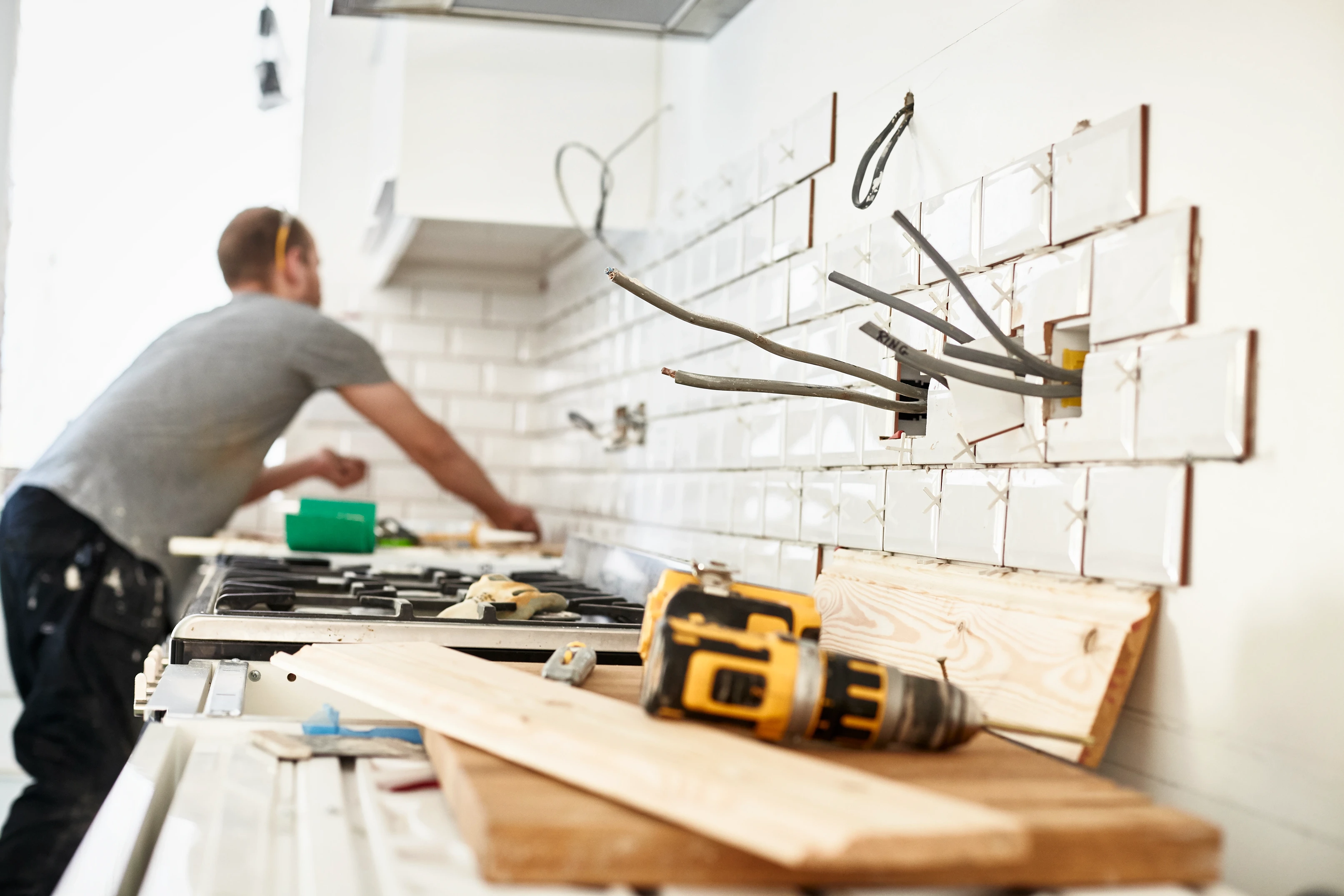
Kitchen remodeling contractor installing electrical wiring and tile backsplash behind stove.

Kitchen Remodel Mistakes That Cost Homeowners Later

Layout, ventilation, wiring and finish-order errors can look fine on handover day and surface once you cook, plug in and live in the room.

Read More
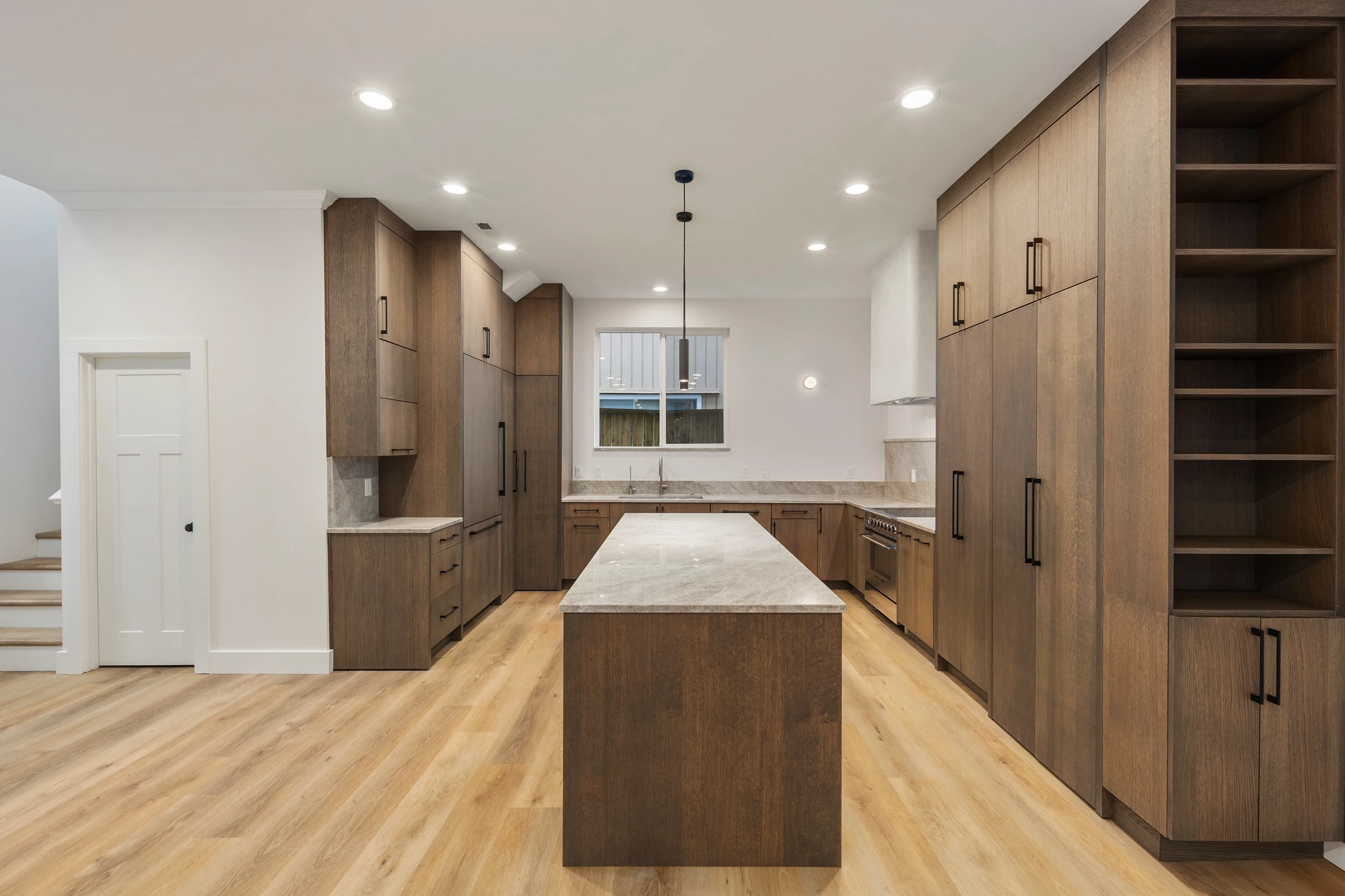
Modern kitchen remodel with walnut cabinetry, quartz counters, and tile backsplash.

How Long Does a Kitchen Remodel Take? What to Expect Each Week

You pictured the finished kitchen. You didn't picture the weeks of dust and takeout to get there. Here's the real timeline, week by week.

Read More