

•
8-minute read
💡 TL;DR:
Do you need a remodel permit in King County? Usually yes, but the process differs by city. Seattle uses SDCI's field-inspection-versus-plan-review split, Kirkland runs four review tracks through MyBuildingPermit.com, and Kenmore's small department reviews by hand. Structural, plumbing, and electrical work is what triggers full review.
Getting a remodel permit in King County sounds like one process. It is not. People assume the county issues a single kind of permit, and it does not.
Each city runs its own building department, its own portal, and its own review timeline. A kitchen project that clears review in days in one city can take weeks in the next, for the exact same scope.
That matters most in the three cities we work in often: Seattle, Kirkland, and Kenmore. Seattle is its own animal. Kirkland and Kenmore share a portal but not a process. Knowing the difference before you apply is what keeps a remodel on schedule.
Here is how each one actually works. If your home sits in Snohomish County instead, our guide to remodel permits in Snohomish County covers Edmonds, Mukilteo, Bothell, and more.
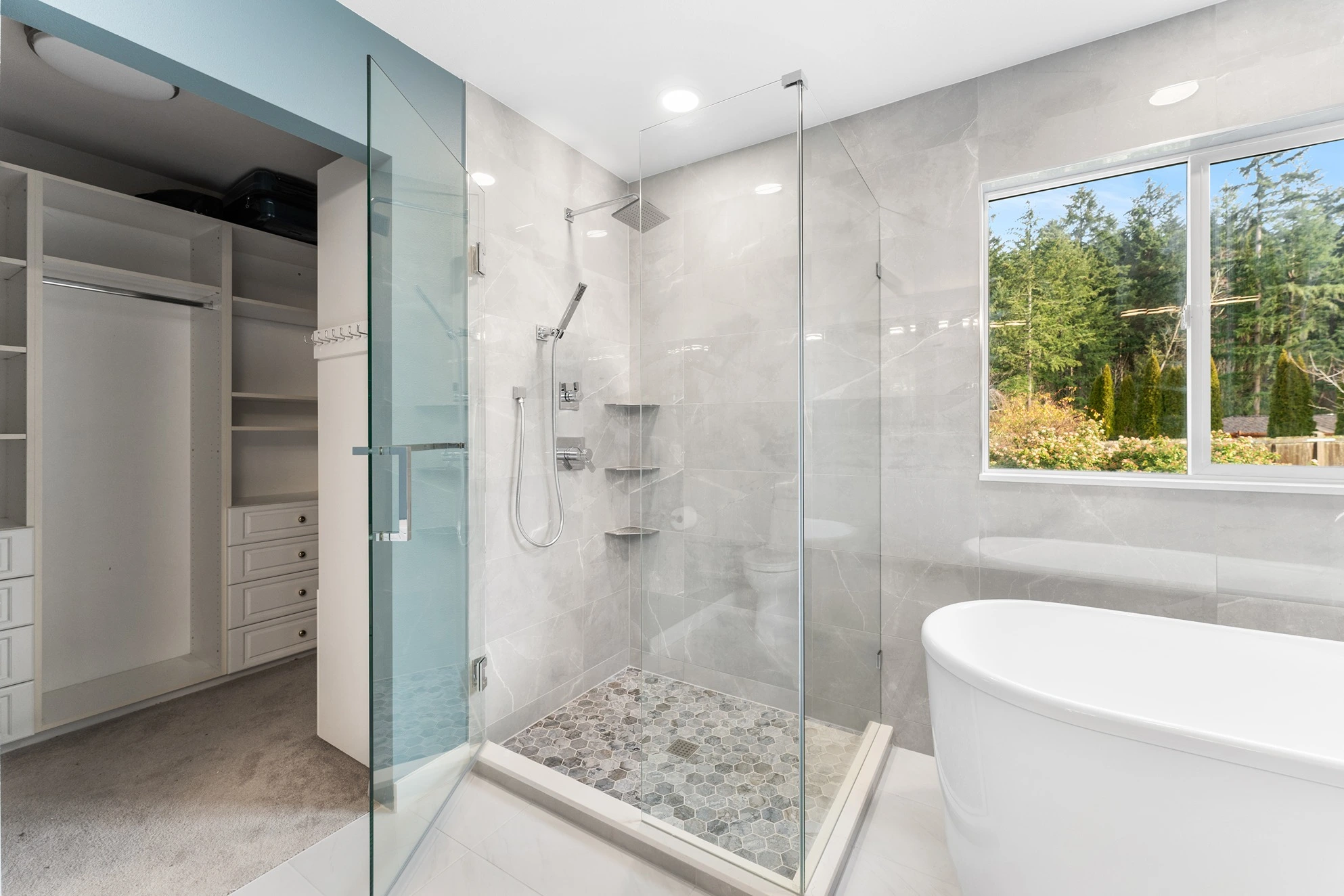
Almost always, yes, once you go past the cosmetic surface.
Swapping a faucet, repainting cabinets, or laying new flooring over the same footprint usually needs nothing. The moment you move plumbing, add or relocate electrical circuits, or take out a wall, you are in permit territory in every King County city.
Work that typically needs a permit:
Work that is often exempt:
Bathrooms follow the same logic, which answers a question we hear constantly: do you need a permit to remodel a bathroom? Usually you do, once plumbing or walls are involved. A walk-in shower conversion or a moved vanity will need one, while a like-for-like refresh may not.
There is also a gray area worth knowing about. Electrical and plumbing permits are sometimes separate from the building permit itself. They can be required even when the main job is small.
That is where a licensed contractor earns their keep, pulling those permits as part of the work. It is also why permitted projects protect you later: every inspection stays on record when you sell.
When you are unsure, assume that structural, plumbing, or electrical work needs review. Guessing wrong is expensive to undo.
Seattle handles every building permit through the Seattle Department of Construction and Inspections, or SDCI. This is where most contractors get vague, so here is the honest version.
Seattle splits remodel permits into two tracks.
The faster one is Subject-to-Field-Inspection, or STFI. SDCI uses it for small projects, and it specifically covers things like remodeling a portion of a house and interior non-structural work. Instead of a full desk review, an inspector verifies the work in the field. Less paperwork, faster turnaround.
The slower one is full plan review. The moment your project adds structure, reroutes major plumbing, or changes how a space is used, it leaves the STFI track and becomes an Addition or Alteration permit with formal review by SDCI staff.
The single biggest way to control your Seattle timeline is designing to stay in the STFI track when the project allows it.
SDCI is clear about one thing: for an STFI permit, the review and screening process takes a few days once your application is complete. From there, the field inspector verifies the work in person rather than at a desk.
Full plan review is a different story. Once your project exceeds what STFI allows, SDCI routes it to an Addition or Alteration permit with formal review, and that takes noticeably longer, often several weeks or more depending on scope and how busy SDCI is that season.
Two things move your timeline more than anything else:
That second point is where planning pays off. A remodel designed to avoid structural and major plumbing changes can skip full plan review altogether. Our experience remodeling homes across Seattle helps us design scopes that stay on the faster track whenever the project allows it.

A Kirkland building permit does not go through SDCI, and Kirkland does not use Seattle's vocabulary.
Applications go through MyBuildingPermit.com and are reviewed by Kirkland's Development Services Center. Instead of two tracks, Kirkland sorts projects into four, based on how much review they need.
Most standard residential remodels land in the several-week range once review begins, and the city is upfront that these are targets rather than guarantees.
One Kirkland-specific wrinkle: if the property sits near Lake Washington, shoreline and steep-slope rules can add a second review track on top of the building permit. That is easy to miss, and it extends the timeline. Our experience remodeling homes in Kirkland means we plan for those overlays before they become a delay.
Kenmore is small, and its permit process reflects that.
Applications go through MyBuildingPermit.com, the same portal as Kirkland, but the experience is more hands-on. Reviews run through Kenmore's Community Development team, and the permit counter is open by appointment with limited midweek hours. With less automation, staff will often walk you through what your project needs, which bigger departments rarely do.
The tradeoff is that timelines depend on staff availability rather than a fixed track system. A straightforward project can get a quick answer, while a full queue means a longer wait. Planning around that, instead of assuming a set turnaround, is what keeps a Kenmore remodel predictable.
Kenmore also sits on the north end of Lake Washington, so waterfront and near-water projects can trigger Shoreline Management Act review on top of the standard permit. Our projects in Kenmore reflect how we handle that process start to finish.
A remodel permit in King County can follow very different paths from city to city, but the dividing line between them is remarkably consistent.
Over-the-counter or field-inspection issuance is for work that does not change structure or systems, like a like-for-like swap or a simple, self-contained update. Full plan review kicks in the moment a project touches:
So the same kitchen remodel might be over-the-counter in Kirkland, an STFI in Seattle, and a hand-reviewed application in Kenmore, and still cross into full review in all three the instant a wall or a plumbing line moves. The name changes. The trigger does not.
Permit fluency is not glamorous, but it is where remodels quietly succeed or stall.
A remodeler who knows that Seattle rewards a clean first submission, that Kirkland has four tracks and a shoreline overlay, and that Kenmore reviews by hand can plan the timeline honestly instead of promising a date the city will never hit. That is the difference between a project that moves and one that sits in a queue.
If you would rather not decode three permit systems yourself, our team can manage the permit process for your remodel from application through inspection.
Permits are the least visible part of a remodel and one of the most common reasons projects stall. Getting them right in your specific city is what separates a smooth build from a delayed one.
At Vital Needs Remodeling, we handle the permit path for each city we work in, so your project is planned around real requirements instead of assumptions. Contact us for a free estimate, and we will walk you through exactly what your remodel needs from day one.
In nearly all cases, yes, if the work involves plumbing, electrical, or structural changes. Moving a sink, adding circuits, or removing a wall requires a permit in Seattle, Kirkland, and Kenmore alike. Purely cosmetic updates like new cabinet fronts or countertops over the same layout often do not.
Most bathroom remodels in Seattle need a permit, especially anything involving plumbing, electrical, or moved walls. Small non-structural updates may qualify for the faster Subject-to-Field-Inspection track, while larger scopes go through full SDCI plan review.
It depends on the track. For an STFI permit, SDCI says the review and screening process takes a few days once your application is complete. Projects that need full plan review take longer, often several weeks or more, depending on scope and SDCI's workload.
An STFI permit skips formal desk review for small, non-structural projects, with an inspector verifying the work in the field instead. Full plan review is required once a project adds structure, reroutes major plumbing, or changes a space's use, and it takes considerably longer.
No. Kirkland permits through MyBuildingPermit.com and reviews projects in four tracks: Over-the-Counter, Express, Fast Track, and Regular. Seattle uses its own SDCI system with a different structure, so the two cities are not interchangeable.
Kenmore accepts applications through MyBuildingPermit.com, with review handled by its Community Development team. Because the department is small, the process is more hands-on, and the permit counter operates by appointment. Waterfront projects may also trigger shoreline review.
Generally, cosmetic work that does not change structure or systems, such as painting, cabinet refacing, countertop replacement, flooring over an existing base, and like-for-like fixture swaps. Once you move plumbing, alter wiring, or change walls, a permit is almost always required.
Unpermitted work can lead to a stop-work order, fines, and a requirement to open finished walls or floors for retroactive inspection. It can also complicate a future home sale, since buyers and inspectors flag work with no permit history.


.png)


.svg)