

•
9-minute read
💡 TL;DR:
An older home remodel in the Pacific Northwest almost always starts below the surface, not with finishes. Crawl space moisture, dated framing, and foundation dampness shape your real scope and budget long before tile and cabinets enter the picture.
Here in Snohomish County, a remodel rarely begins with paint colors. It begins with what the last fifty or sixty winters left behind.
An older home remodel in the Pacific Northwest tends to uncover crawl space moisture problems, soft framing, and foundation dampness that never showed on the surface.
Roughly half of all housing in Everett was built before 1980, and much of Edmonds went up between 1950 and 1969. The "character" you are buying often comes with water that has had a long time to settle in.
The good news is that none of this is a reason to walk away. It is a reason to look first, plan second, and build third.
Remodeling an older home in the Pacific Northwest is different from updating a newer build, and the climate is the reason. Our long wet season runs from October into March, and older houses were built in a dozen different eras with a dozen different ideas about how to handle it.
A home in North Everett might be a Craftsman or foursquare from the early-1900s timber boom. A home in the Edmonds Bowl might be a mid-century cottage with a vented crawl space. Each one hides water differently.
That is why a smart remodel starts with discovery, not demolition. Before committing to a scope, a good contractor looks at:
This is the stage where our full home remodeling process earns its keep. Getting the sequence right at the start is what keeps a renovation from turning into a rescue.
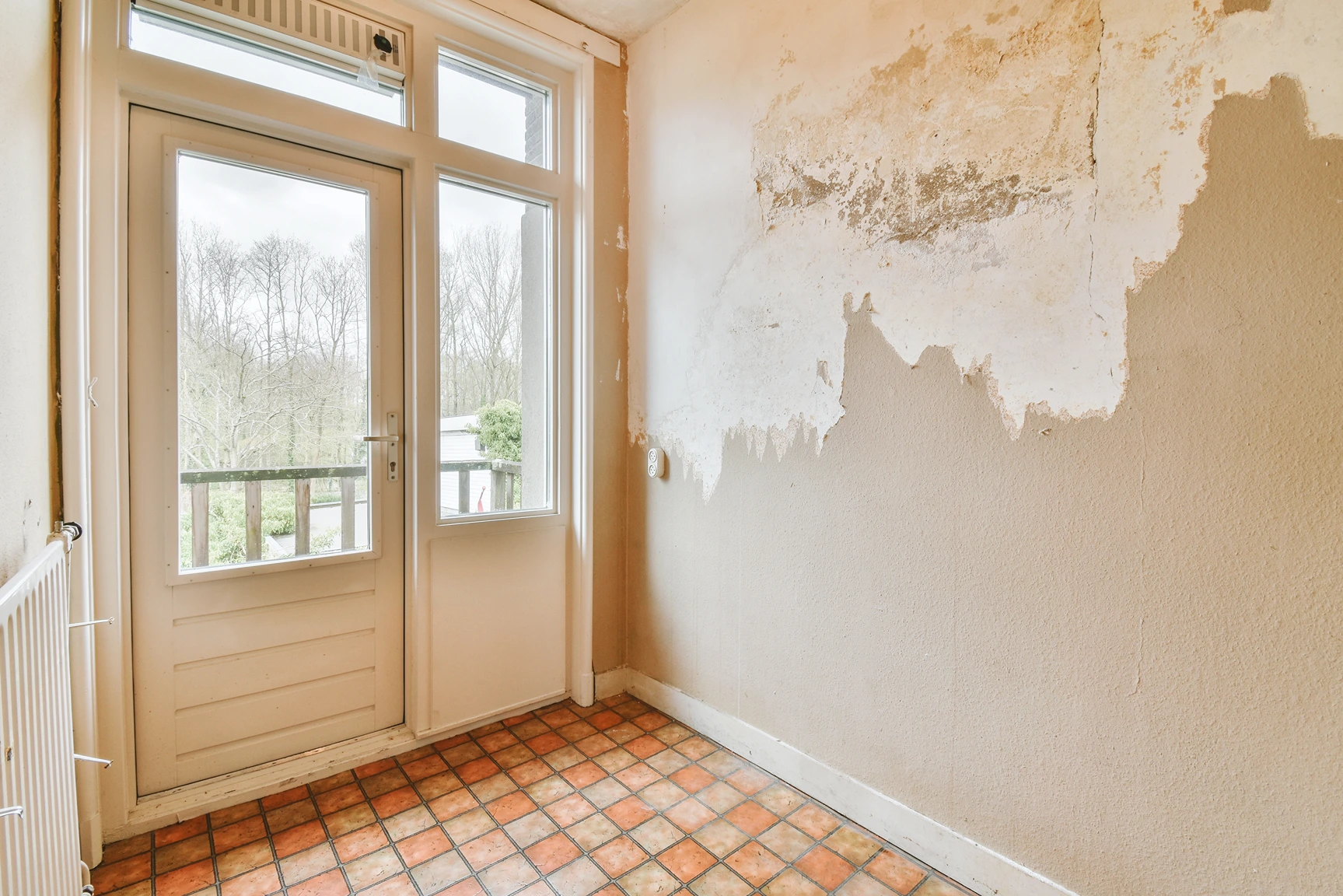
Open up a wall in a home built before 1980 and the surprises tend to rhyme. The materials were good for their day, but sixty winters of Northwest damp change things.
Homes from the early and mid twentieth century were wired for a different era. Knob-and-tube wiring, undersized panels, and old plumbing runs often turn up once walls are open, and they frequently need to be addressed before new work can go in.
This is the most common and most consequential find. Dry rot repair is one of the most frequent hidden line items in an older Snohomish County remodel. Slow leaks around windows, tubs, and roof edges feed the moisture that fungus needs, and the damage spreads inside the framing where no one sees it.
Rotted subfloor repair shows up often too, especially in bathrooms and kitchens where water has had decades to work. Learning how to tell if a house has water damage before you commit is one of the smartest things a homeowner can do.
Where there is trapped moisture, there is usually mold behind walls. It rarely means the house is unsound, but it does mean the source has to be found and fixed, not painted over.
Homes in the historic pockets of Everett, like the pre-1920 stock around Grand Avenue, and the older farmhouses scattered through Edmonds neighborhoods tend to carry more of these conditions simply because they have been standing the longest.
Many homes built before the 1980s went up with little wall insulation and no plan for moving damp air out of bathrooms and kitchens. In a climate this wet, that combination traps humidity against framing and drywall. When a remodel opens these walls, it is often the first real chance to add proper insulation and venting, which is work that pays off in comfort and in lower moisture risk for decades after.
If there is one thing that defines an older Pacific Northwest home, it is what is happening in the crawl space. This is where crawl space moisture problems and foundation water damage quietly shape everything above.
Many older homes here sit over a vented crawl space, a design meant to let outside air carry dampness away. In our climate that often backfires, pulling humid air in to condense on cool framing below the floor.
Signs worth checking include:
Wet crawl space solutions often start outside, not inside. Poor grading and missing gutters send roof and yard water straight toward the foundation, and no vapor barrier can outrun water pooling against the house.
Foundation moisture tends to announce itself slowly. Hairline cracks, efflorescence on concrete, and a damp lower level are common in homes that have shed water poorly for decades. On a hillside lot, which Snohomish County has in abundance, hydrostatic pressure in saturated soil can push moisture right through a foundation wall.
Our wet season is not a storm, it is a season. Months of steady rain keep the soil around a foundation saturated far longer than in drier regions, so a small drainage flaw becomes a standing problem rather than a passing one. That is why moisture here is rarely a one-time fix and almost always a sequencing question for your remodel.
A practical result is that the same house can look dry in August and show problems by December. Inspecting an older home during or just after the wet months gives the truest picture of how it handles water, which is why the timing of your planning matters as much as the timing of your build.
Here is the part homeowners do not always expect. Moisture and foundation findings do not just add a task, they reorder the whole project.
New flooring over a wet crawl space is likely to fail. Fresh paint over active dry rot will not last. A beautiful kitchen built on a soft subfloor inherits the problem underneath. For an older home remodel in the Pacific Northwest, the unglamorous work has to come first.
Here is the order that protects the finished result:
Homeowners across Everett and the rest of Snohomish County get far better results when the scope follows the house, not a wish list. Skipping the order is how budgets break.
Every honest old house renovation carries a number you cannot see on day one. That is not a flaw in the plan, it is the plan being realistic.
Because the houses of this era in Everett, Edmonds, and the rest of Snohomish County hide their condition, a sensible remodel budget includes a contingency for what opens up once walls and floors come apart. A contractor who has worked on local homes can usually tell you where the risk is highest before anything is torn out, which keeps surprises small and planned for rather than large and sudden.
A few principles keep the budget realistic:
Handled this way, the hidden work stops being a threat to the project and becomes a known, managed part of it.
Older homes in Snohomish County reward patience and local knowledge. The houses are worth saving, and the moisture they have collected over the years is manageable once someone looks in the right order.
At Vital Needs Remodeling, we plan every older home remodel around what the house is actually telling us, so the finishes you love sit on a foundation you can trust. Contact us for a free estimate, and let us walk your home before the first wall comes down.
Look for soft or cupped flooring, musty odors near the crawl space, staining on baseboards or ceilings, and sticking doors or windows. A professional moisture reading and a crawl space inspection will confirm what your eyes suspect, and both are worth doing before you finalize any remodel scope.
Yes, but the crawl space comes first. Building new finishes over active moisture almost guarantees they will fail. The usual path is to fix drainage and grading outside, address the vapor barrier and ventilation, then move on to the remodel itself.
The main cause is water that is not leaving the house properly. Poor grading, missing or clogged gutters, and saturated soil during our long wet season push moisture toward and through foundation walls. On sloped lots, hydrostatic pressure in the soil makes it worse.
Almost never. Dry rot is common in Northwest homes of this age and is very repairable once the moisture source is fixed. It only becomes serious when it is ignored for years, which is why finding it early during planning works in your favor.
Every home is different, so the right answer comes from an inspection rather than a rule of thumb. The sound approach is to include a contingency in your overall budget specifically for conditions found once walls and floors are opened, so a surprise is already accounted for.
They do. Much of the local stock predates modern moisture and energy codes, with Everett and Edmonds holding large shares of pre-1980 homes. Wiring, insulation, drainage, and crawl space design all tend to need attention that a newer home would not.
Any season can work, but planning through the wet months is smart because that is when moisture and drainage problems are easiest to spot. Starting the build in the drier stretch from late spring through early fall often makes the exterior and foundation work smoother.


.png)


.svg)